B2B Corporate · Hospitality
The Tempisque
A 14-person table that doesn’t crowd the chairs.
Monkey Pod·141½"·Seats 12–14

A fallen tree, decades old, on a farmer's land in rural Guanacaste. Bernardo travels to choose it himself — species, age, and grain confirmed under MINAE harvest permit. Fifteen weeks of production later — milled, kiln-dried twice, finished in South Carolina — it's a piece no one else owns.
Tables shown are renderings. Actual slab photography is included in your spec sheet once we match you to available inventory.
A 14-person table that doesn’t crowd the chairs.

The smaller slab — for a salon, not a dining hall.

A residential dining hero — quiet, considered.

Coastal residences have been waiting for this slab.

For lofts that want a dining piece, not just a dining table.

The slab that anchors a great hall.

Built for an oceanfront room and the light it gets.

Hospitality scale, residential warmth.

Built for a long lunch and a longer dinner.
Three recent custom commissions for hospitality projects. The collection above is the current catalog; bespoke pieces are designed and produced on request.
Reception desk and chandelier for the lobby.
Reception desk, lounge chairs, and coffee table for the arrival area.
A 13-foot Guanacaste table with double live-edge drop.
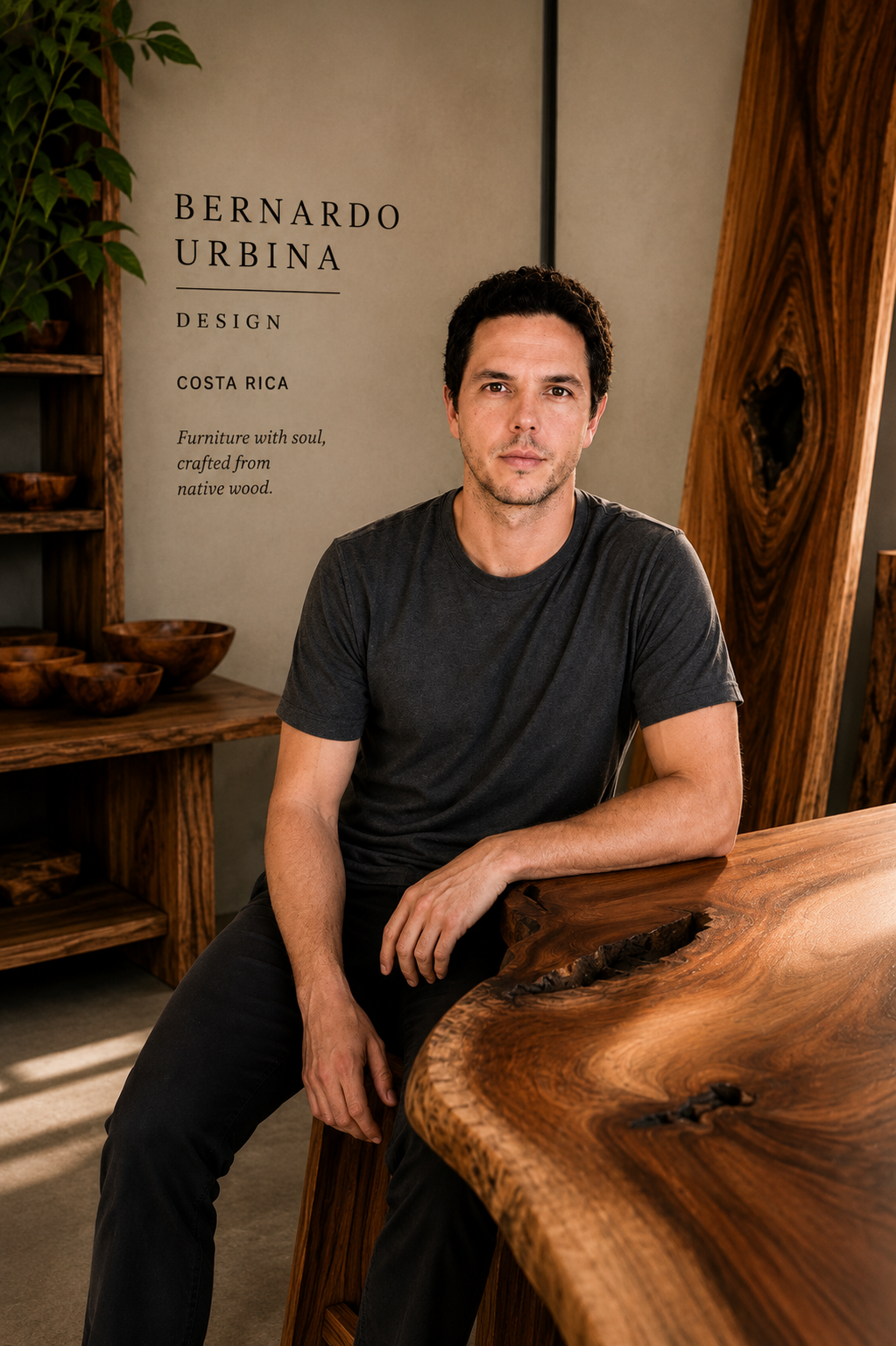
Bernardo spent five years in New York — studying furniture design at Pratt Institute, then working in SoHo studios. He moved to Milan to earn his Master's at Politecnico di Milano, then worked on exhibition design in the city — including Moooi installations during Salone del Mobile and projects for the Triennale di Milano. After three years in the Philippines — where he founded his first furniture brand and was featured in The New York Times — he returned home to Costa Rica.
Today he works between a mill in rural Guanacaste and a finishing studio in South Carolina. Every piece is sourced, designed, and overseen by Bernardo from a farmer's tree to a designer's spec sheet — the table that arrives is the table he chose.
From a farmer’s tree in rural Guanacaste to the South Carolina workshop — thirteen to fifteen weeks of production, six stages, one person overseeing every one.
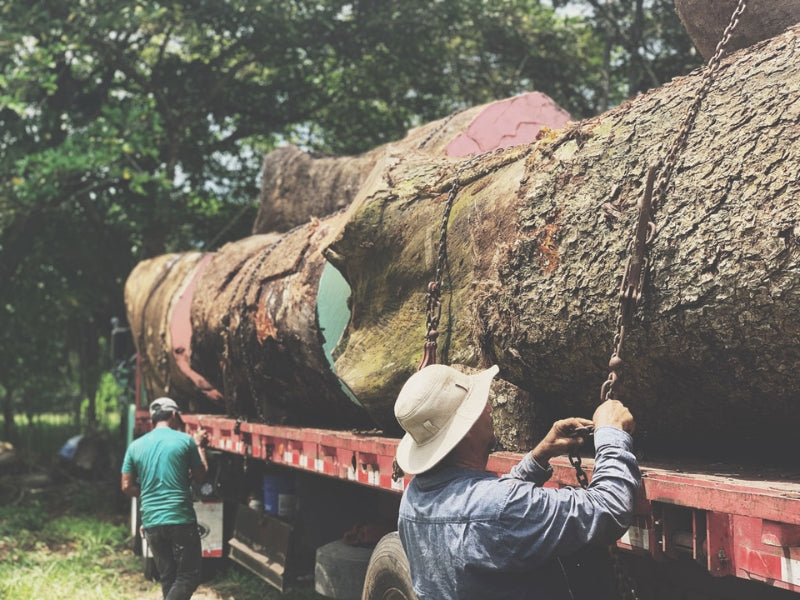
A fallen tree on a farmer’s land in rural Guanacaste, harvested under MINAE permit. Bernardo selects every log personally — species, age, grain.
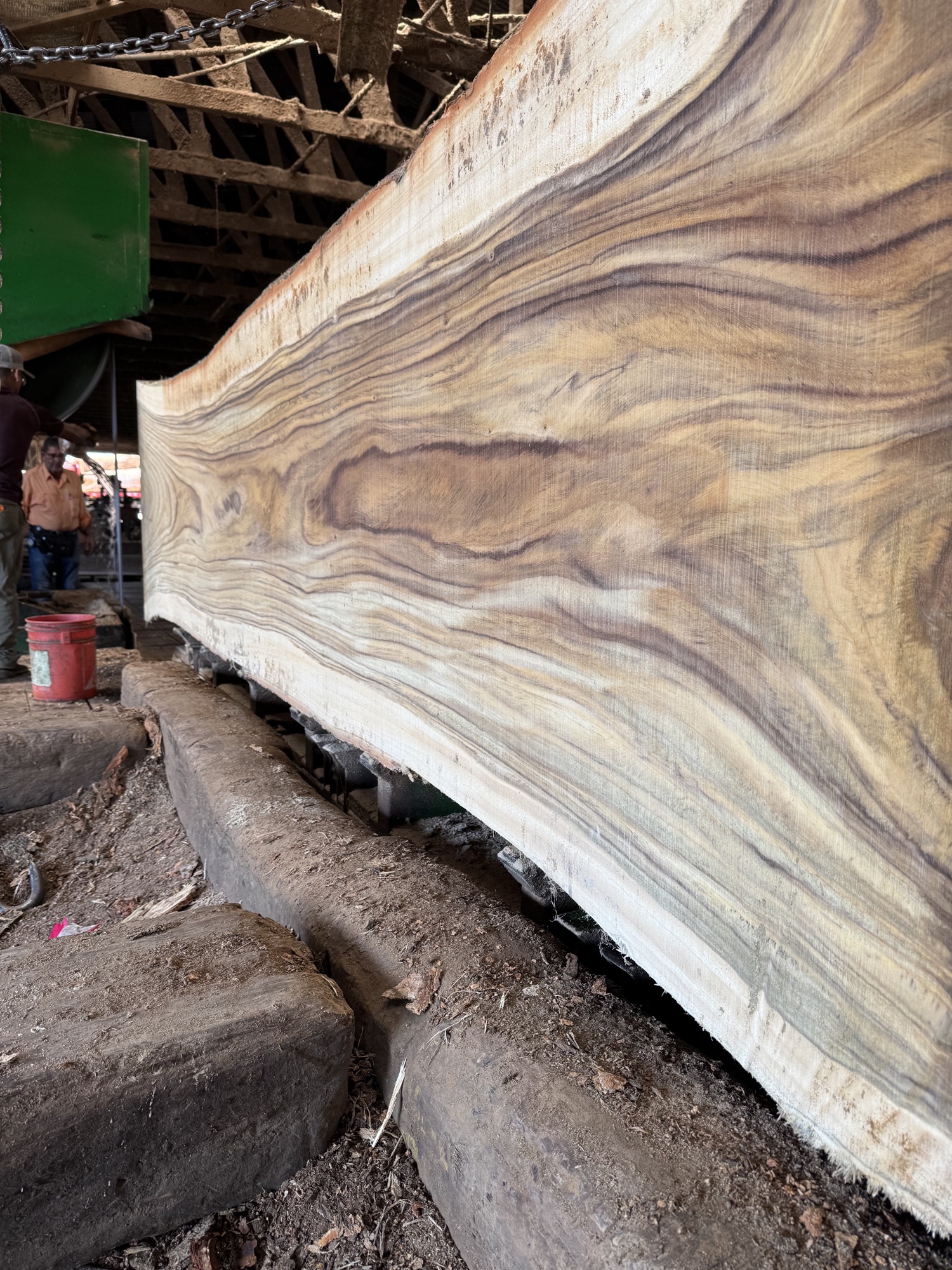
Bernardo decides how each log will be cut. The right cut reveals what the wood wants to be — then the slab is photographed, catalogued, and named.
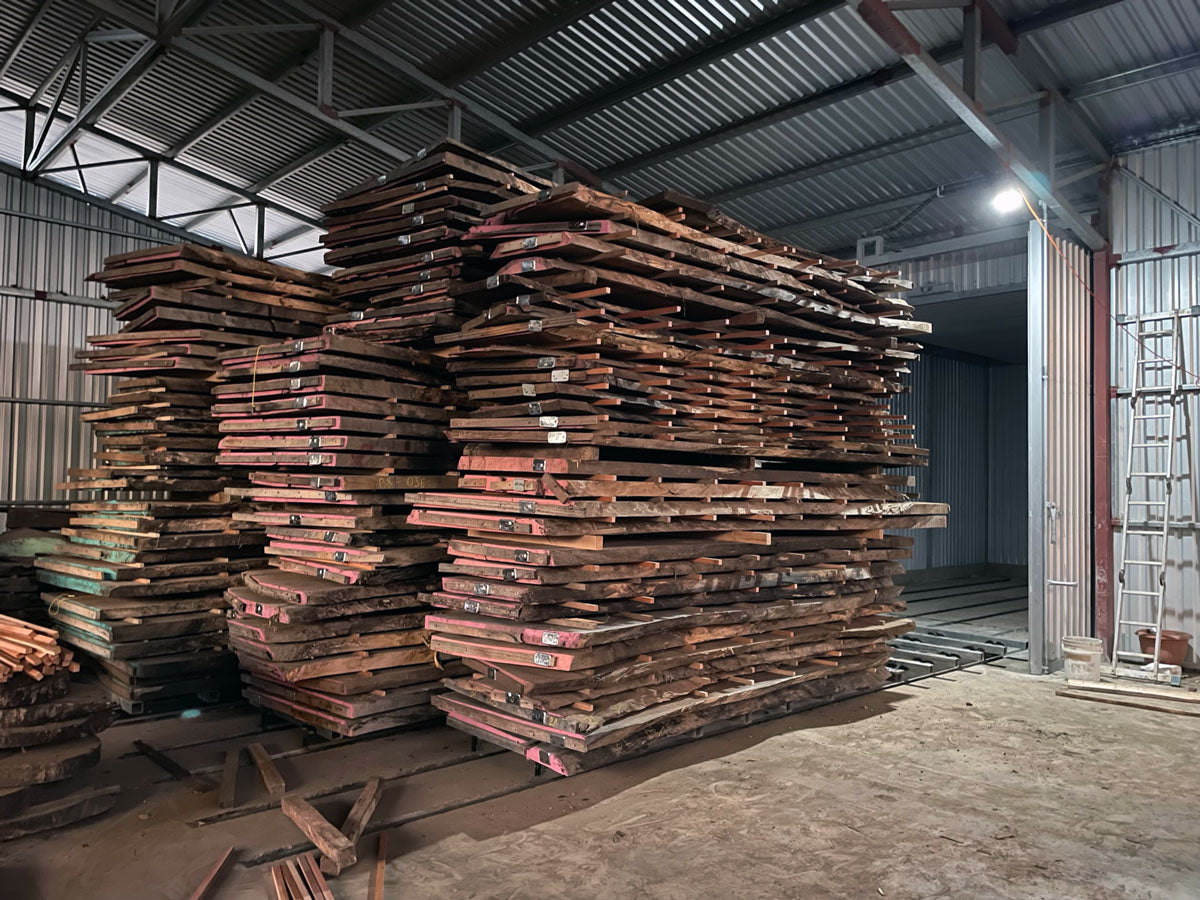
Two and a half to three months of controlled descent. Shaded airflow, then the Italian kiln on site. The slab leaves Costa Rica uniform and stable.
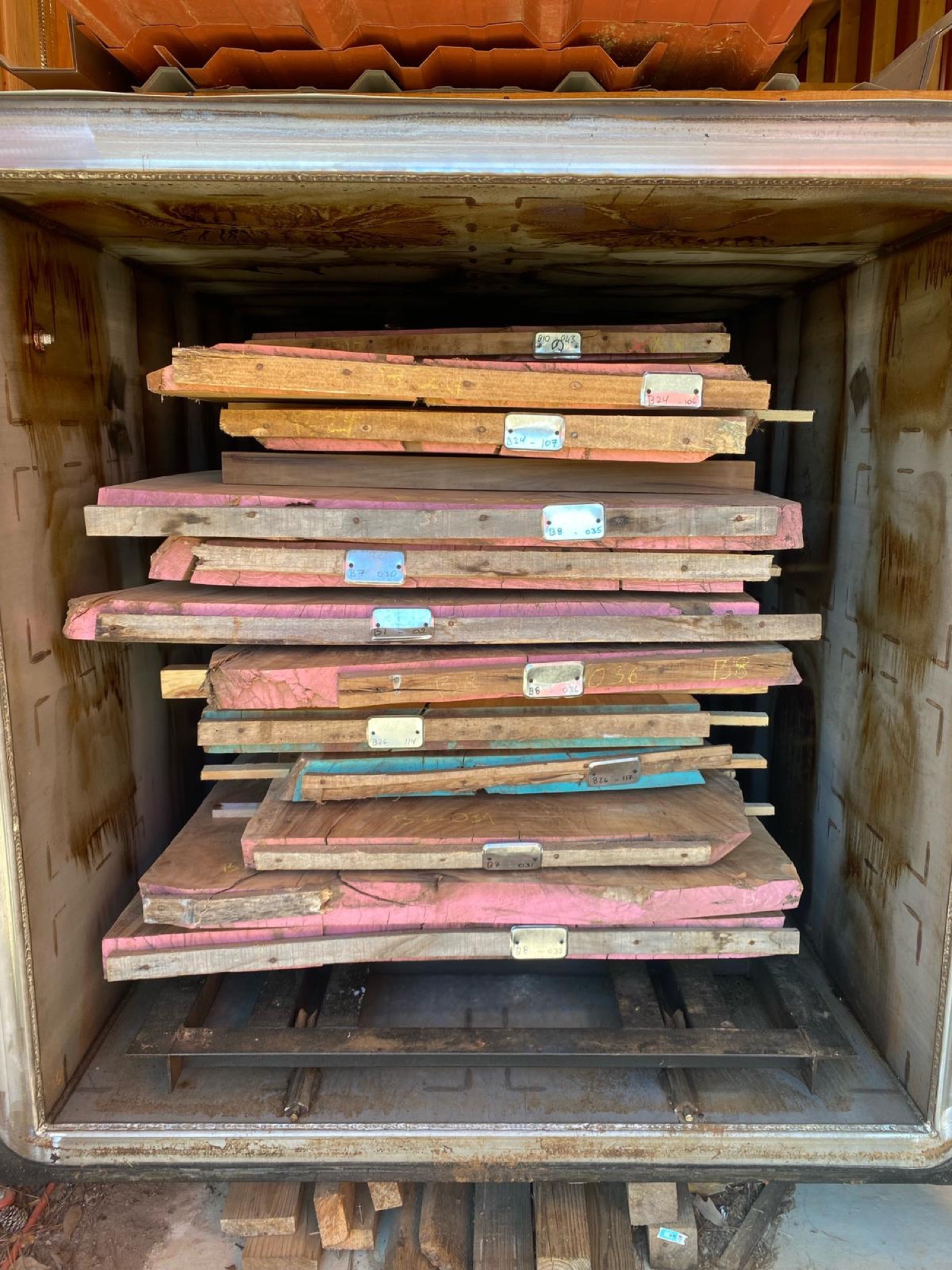
iDry vacuum kiln calibrated to US interior moisture. From Aspen winter to Miami humidity, the slab holds stable — moisture measured and recorded for every piece.
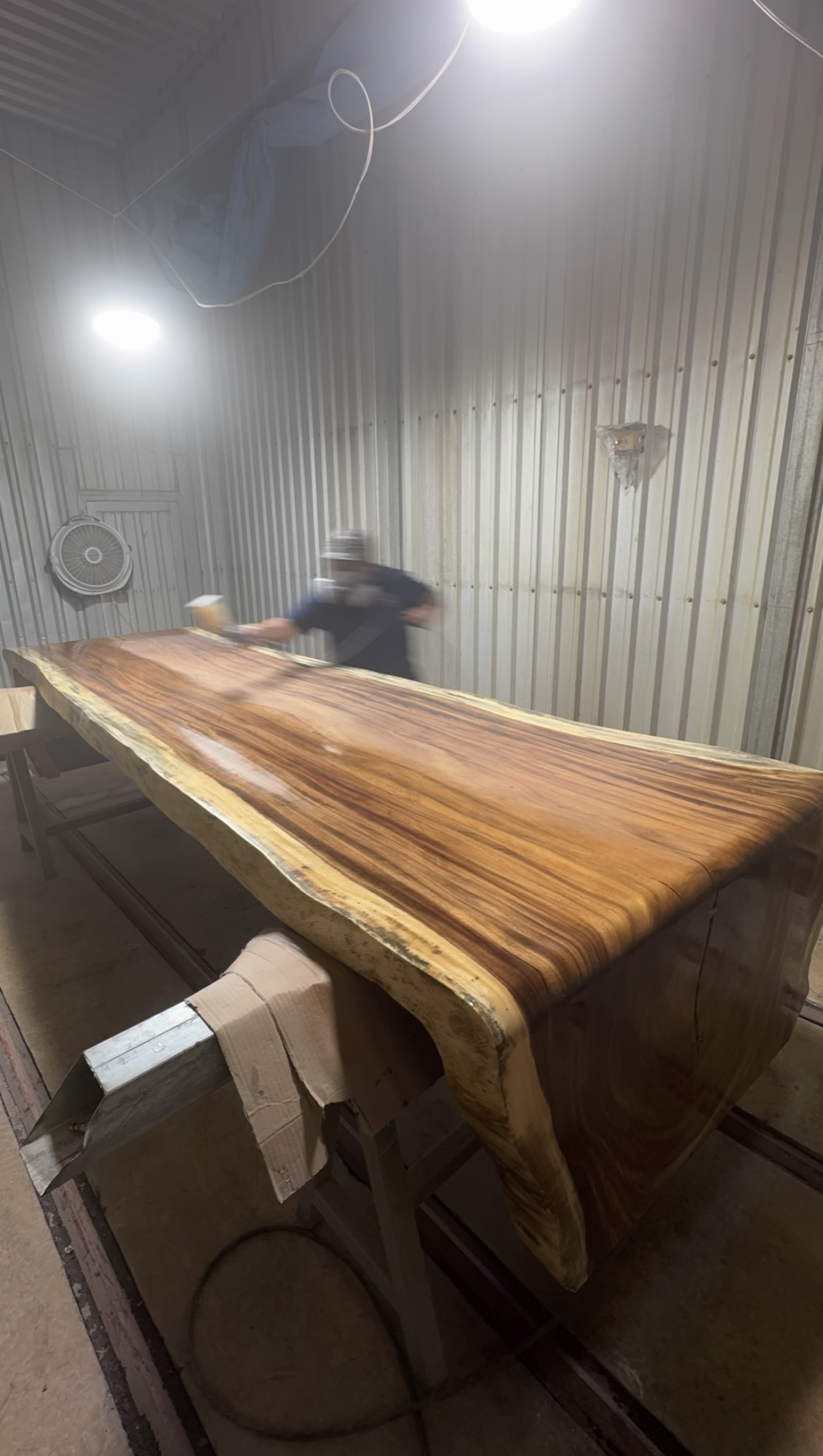
120-grit sanding, then 1K clear satin polyurethane — commercial-grade for chef’s tables, hotel lobbies, boardrooms. Every piece signed, numbered, and photographed before shipping.
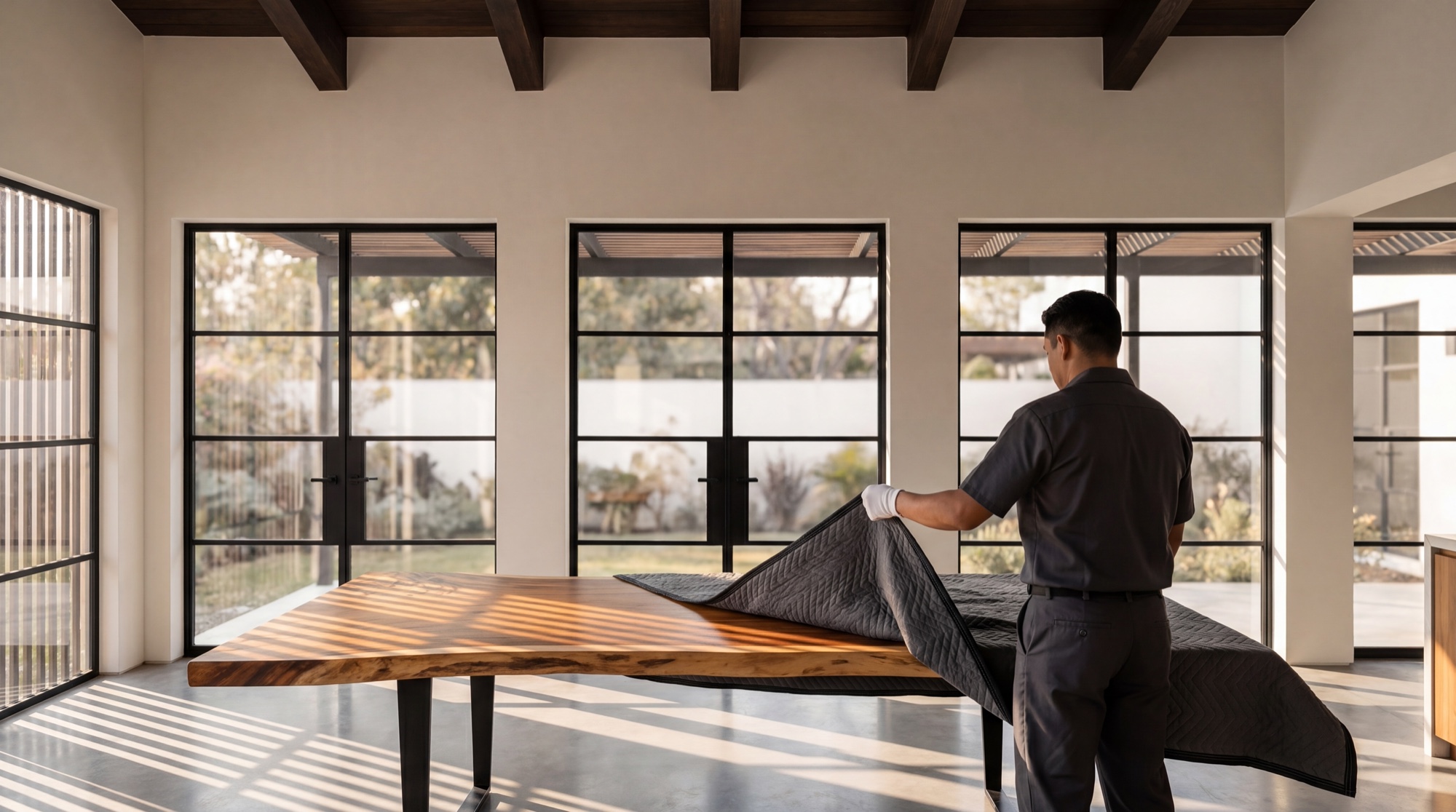
White-glove freight on quote — ArcBest, Plycon, or your preferred carrier. CAFTA-DR duty-free, room of choice, packaging removed on site.
The full trade catalog lands in your inbox the moment you submit — and here's what happens after that.
The 12-page trade catalog arrives in your inbox within one business day — dimensions, base options, finishes, and trade pricing for all nine pieces.
Real photography of the slabs being considered, plus base options (steel or hardwood) and any design details. Everything signed off before commission begins.
A 50% deposit secures the slab. Bernardo signs the spec sheet, and the piece enters the 13–15 week production schedule in South Carolina.
White-glove freight is quoted on completion — ArcBest, Plycon, or your preferred carrier. Or arrange your own delivery from the workshop.